Upper Egypt — Nubia Gateway

Aswan: Philae, Abu Simbel & the Nubian Nile

Egypt's southernmost major city sits where the Nile emerges from a landscape of black granite boulders and ancient Nubia begins. This guide covers every significant site, the Abu Simbel day trip in detail, and how to spend two days in Aswan without rushing.

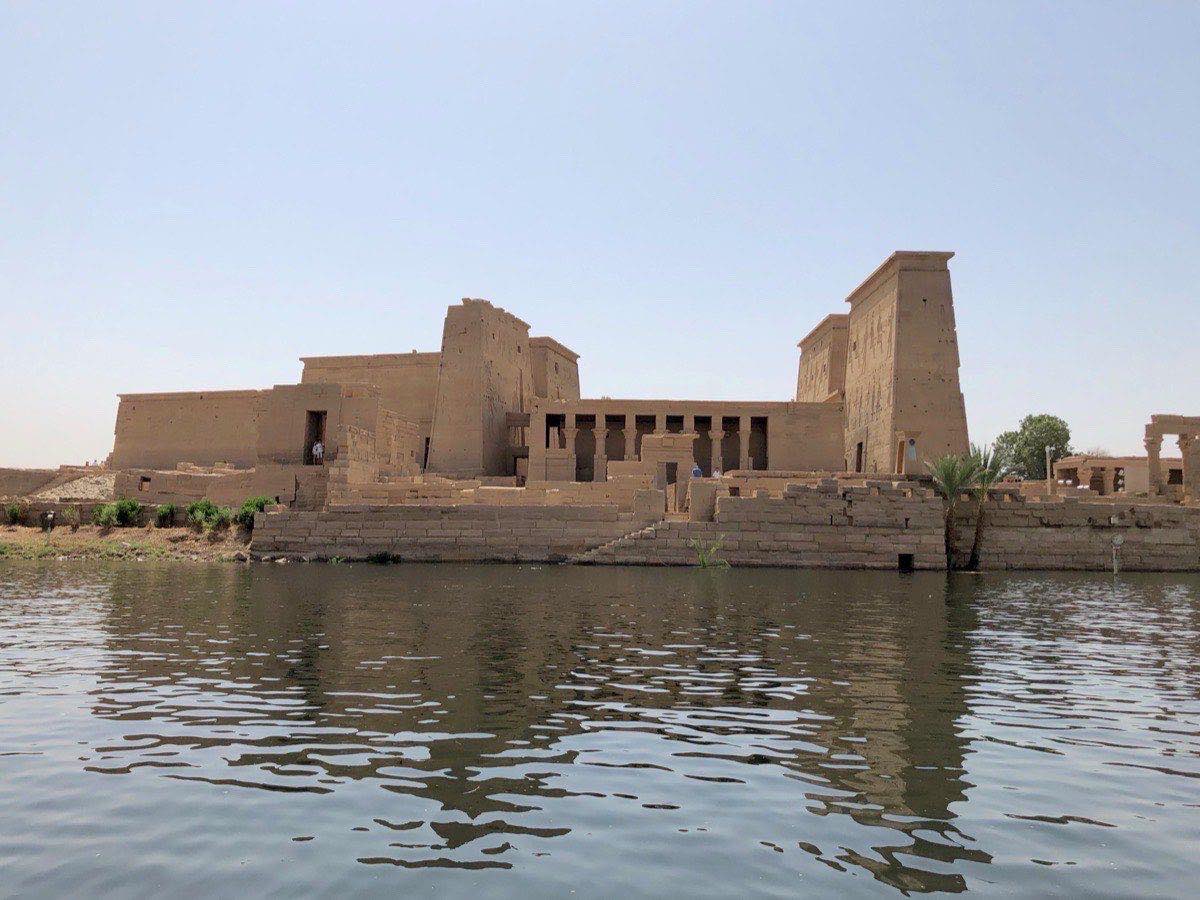
Philae Temple on Agilkia Island viewed from a boat on the Nile at Aswan
The City & Its Setting

Why Aswan Is Different

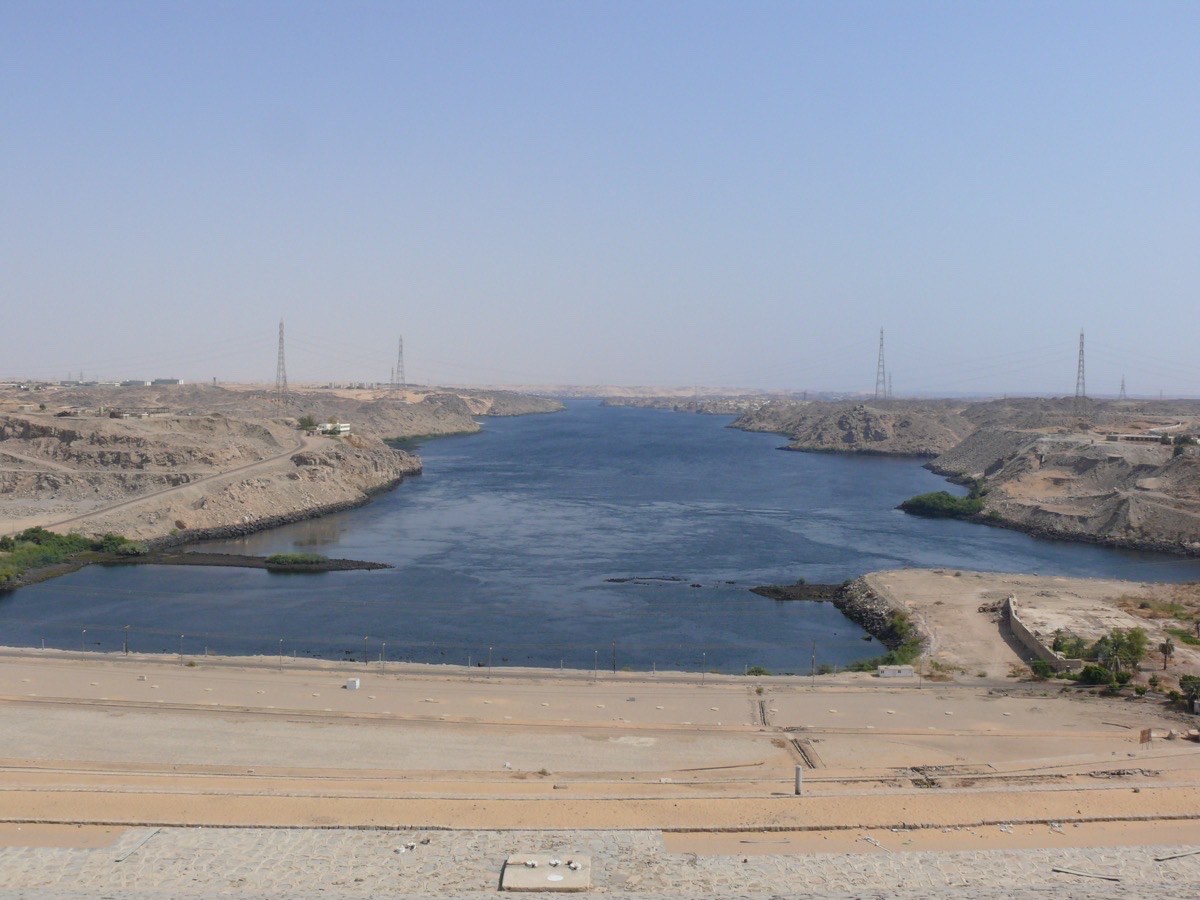
Aswan (ancient Swenett and later Syene) sits at Egypt's First Cataract — a stretch of the Nile broken by granite boulders that was historically the southernmost boundary of Egypt proper. Beyond it lay Nubia, which Egypt controlled and traded with for millennia. The granite of Aswan's quarries was used to build monuments across Egypt: the obelisks of Karnak, the statues at Memphis, the colossi at Abu Simbel — all quarried within a few kilometres of the city.

The modern city of roughly 280,000 people retains a pace and character markedly different from Cairo or Luxor — slower, less intensely commercial, and more Nubian in cultural character. The Nubian population of Aswan maintains distinct traditions, architecture (characterised by brightly painted mudbrick houses), and hospitality that makes the area rewarding beyond its monuments. Several Nubian villages on the west bank are openly welcoming to independent visitors.

The Nile at Aswan, breaking around granite islands including Elephantine (the ancient city of Yeb), is one of the most beautiful stretches of the river. Felucca sailing at sunset from the Aswan corniche — Kitchener's Island in the foreground, the Aga Khan Mausoleum visible on the west bank hill — is among the best low-cost experiences in Egypt.

  • Aswan is accessible by overnight sleeper train from Cairo (13 hours) — far preferable to economy bus
  • Direct flights from Cairo (EgyptAir) take 75 minutes — convenient but skip the river landscape
  • From Luxor: 3–4 hours by fast train, or 4 days by Nile cruise (recommended)
  • Minimum recommended stay: 2 days (1.5 if Abu Simbel is excluded)
Aswan sunset with Nile and felucca silhouettes
Verified Prices — June 2024

Aswan & Abu Simbel Entry Prices

Site Adults (EGP) Students (EGP) Practical Notes
Philae Temple (Agilkia Island) 180 90 Boat required — EGP 60–80 per person return from Shellal Dock
Nubian Museum 120 60 Open daily 09:00–13:00 and 17:00–21:00; closed Tuesday AM
Unfinished Obelisk 80 40 Still in situ in the granite quarry; short visit (30–45 min)
Elephantine Island (Aswan Museum) 120 60 Free public ferry to island; museum ticket separate
Abu Simbel (Great Temple + Small Temple) 450 225 280 km from Aswan; convoy drive (~3 hrs) or 45-min flight
Kom Ombo Temple 160 80 60 km north of Aswan; usually visited from Nile cruise
Felucca (one-hour sail, negotiated) EGP 200–350 per boat Up to 6 passengers; sunset departure recommended
The Island Temple

Philae Temple — Isis on Agilkia Island

Philae temple columns and pylon reflected in still Nile water

The Temple of Isis at Philae was the last functioning ancient Egyptian religious institution — priests continued to perform Isis rituals there until 550 CE, six centuries after the rest of Egypt had adopted Christianity and roughly 400 years after the rest of Egypt's ancient temples had closed. The site holds a unique place as the final living link to the Pharaonic religious tradition.

Like Abu Simbel, Philae was relocated to save it from the rising waters of Lake Nasser. The original island of Philae became submerged following construction of the Aswan Low Dam in 1902 and was fully inundated after the Aswan High Dam in 1970. Between 1972 and 1980, UNESCO and the Egyptian government dismantled the temple and reconstructed it block by block on the adjacent island of Agilkia, which was then landscaped to replicate the original island's profile.

The main temple complex — pylon, great court, hypostyle hall, inner sanctuary — was built primarily in the Ptolemaic period (300–30 BCE) with significant additions from early Roman emperors including Augustus. The relief work throughout is exceptionally detailed and largely intact. The columns of the outer colonnade still bear substantial pigment — faded but clearly visible pinks, yellows, and blues. The Kiosk of Trajan (a small open-air pavilion on the southeast corner of the island) is one of the most photographed structures in Egypt.

  • Entry EGP 180 adults; boat to island EGP 60–80 per person return from Shellal Dock (12 km from Aswan)
  • Open daily 07:00–16:30 (boats stop running at 16:00)
  • Sound and Light show evenings: EGP 250 adults; boats included in show ticket
  • Allow 60–90 minutes on the island; morning light from the east side is best for photography
The 280 km Day Trip

Abu Simbel: Logistics & What to Expect

Abu Simbel is the single most dramatic monument in Egypt and absolutely worth the logistics of reaching it. This section covers every practical aspect of the day trip from Aswan.

Option A

Convoy by Road

A police convoy departs Aswan daily at 03:30 and 11:00 from the Wadi Halfa Road junction. Private taxis or minibuses join the convoy for the 3.5-hour drive south on the desert highway. Arrive at Abu Simbel around 07:00 (first convoy). Return convoy departs at 12:00. Total round trip: 11 hours. Cost: EGP 600–800 per person including taxi, varies with negotiation and group size. Uncomfortable but authentic.

Option B

Flight from Aswan

EgyptAir operates 45-minute flights from Aswan airport to Abu Simbel, typically timed to allow 2–3 hours at the site before the return flight. Return fares from EGP 2,500–4,000 (international visitors). Significantly more comfortable and faster; allows a more relaxed visit with less crowd pressure as you arrive mid-morning rather than with the first convoy rush.

Great Temple

What You Will See

The Great Temple's facade: four colossal seated Ramesses II statues, each 20 metres high (one partially collapsed in antiquity). The interior: three successive halls descending to the inner sanctuary, where four statues of Ptah, Amun, Ra-Horakhty, and Ramesses himself face the entrance. On two days per year (22 Feb and 22 Oct) sunlight reaches and illuminates Amun, Ra, and Ramesses — only Ptah, god of darkness, remains shadowed.

Small Temple

Temple of Nefertari

The adjacent smaller temple was built for Ramesses II's chief queen, Nefertari — the same queen whose tomb in the Valley of the Queens at Luxor has the finest painted decoration in Egypt. The Small Temple is dedicated to Hathor and depicts Nefertari at the same colossal scale as her husband, a remarkable statement in a period when royal consorts were typically shown at knee-height beside the king.

Continue the Journey

From Aswan: What Comes Next

Nile cruise boat at sunset between Luxor and Aswan
River Journey

Nile Cruises

Most visitors travel between Aswan and Luxor by Nile cruise — either in the classic four-day direction (Luxor to Aswan) or five-day reverse. The cruise stops at Edfu (Temple of Horus) and Kom Ombo (dual-deity temple) along the way. Our guide covers the genuine quality differences between vessel types.

Nile Cruises guide ›
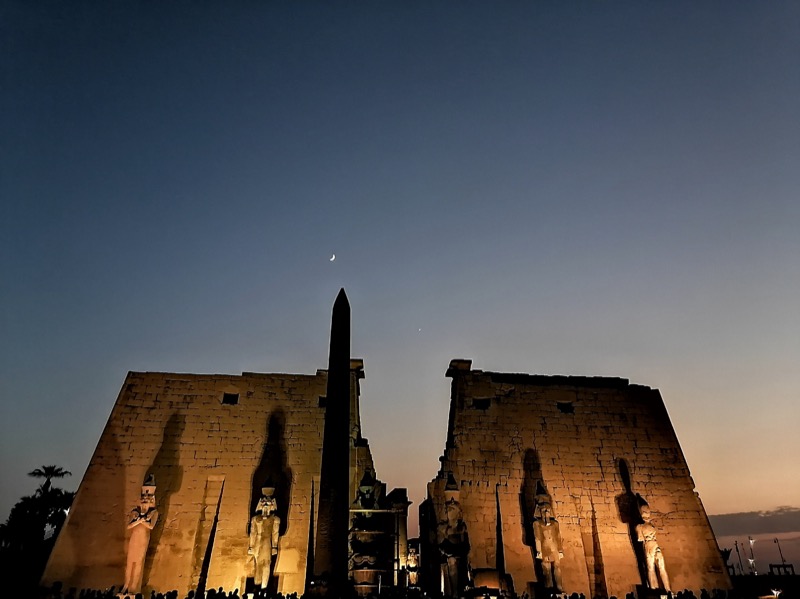
Luxor Temple night illumination
Luxor — 3 hours North

Luxor Temples

Aswan and Luxor are most rewarding when visited sequentially. Aswan's Nubian atmosphere and Ptolemaic temples form one chapter; Luxor's massive New Kingdom temples and royal tombs form another. Together they cover 4,000 years of Egyptian civilisation comprehensively.

Luxor Temples guide ›
Valley of the Kings tombs entrance
Luxor West Bank

Valley of the Kings

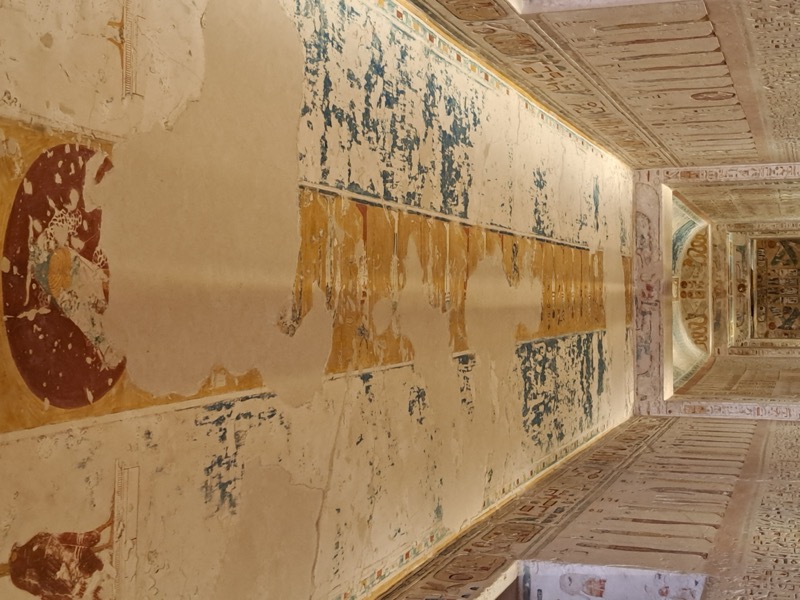
Many of the pharaohs whose temples and inscriptions you encounter at Abu Simbel and Karnak — Ramesses II, Seti I, Thutmose III — are buried in decorated tombs in the limestone hills of Luxor's west bank. The connection between the temples and the tombs is one of the most rewarding aspects of an Upper Egypt itinerary.

Valley of the Kings guide ›

Planning Your Aswan Stay?

Our team can advise on Abu Simbel timing (convoy vs. flight vs. overnight stay), current ferry schedules for Philae, and the best Nubian village visits that do not require a guided tour group.

Send a Message