Luxor West Bank

Valley of the Kings: Tombs, Tickets & Tactics

Sixty-three royal tombs painted floor-to-ceiling with the most elaborate funerary art ever created. This guide tells you which tombs to choose, how tickets work, and what the photography rules actually mean in practice.

Entrance to a royal tomb in the limestone hills of the Valley of the Kings
The Site in Brief

What the Valley of the Kings Actually Is

Between approximately 1550 and 1070 BCE, the pharaohs of Egypt's New Kingdom abandoned the pyramid tradition — deemed too visible and too easily robbed — and instead commissioned hidden tombs cut deep into the limestone mountain of the Theban Necropolis on Luxor's west bank. The Wadi Biban el-Muluk (the Valley of the Gates of the Kings, shortened to Valley of the Kings in modern usage) became the royal burial ground for rulers from Thutmose I through Ramesses XI.

Sixty-three tombs have been catalogued, numbered KV1 through KV63 (KV stands for Kings' Valley). Not all are royal — some belong to queens, princes, or high officials. Not all are open; at any given time approximately 20–25 are accessible to visitors, with the remainder closed for conservation or ongoing excavation. The SCA rotates openings to manage footfall and humidity levels inside the chambers.

The standard ticket (EGP 240) covers site entry plus access to any three tombs of your choice from the standard rotation. Tutankhamun's tomb (KV62), Ramesses V/VI (KV9, widely considered the most spectacular ceiling), and Seti I (KV17, the finest decoration in the valley) each require separate additional tickets. Our recommended combination for most visitors is covered in detail below.

  • Standard ticket EGP 240 — choose any 3 open tombs from the main rotation
  • Tutankhamun (KV62): EGP 300 additional — small but historically essential
  • Ramesses V/VI (KV9): included in standard selection — our top recommendation
  • Seti I (KV17): EGP 1,400 additional — extraordinary but expensive
  • Tomb of the Sons of Ramesses II (KV5): EGP 100 — open by special permit
  • Open daily 06:00–17:00; closed for new visitors from 16:30 onwards
Valley of the Kings limestone hills in afternoon light
Our Recommendations

Which Tombs to Visit

With a standard three-tomb ticket, the selection matters. These are our researcher-recommended combinations for different visitor priorities.

Best Overall: KV9 — Ramesses V/VI

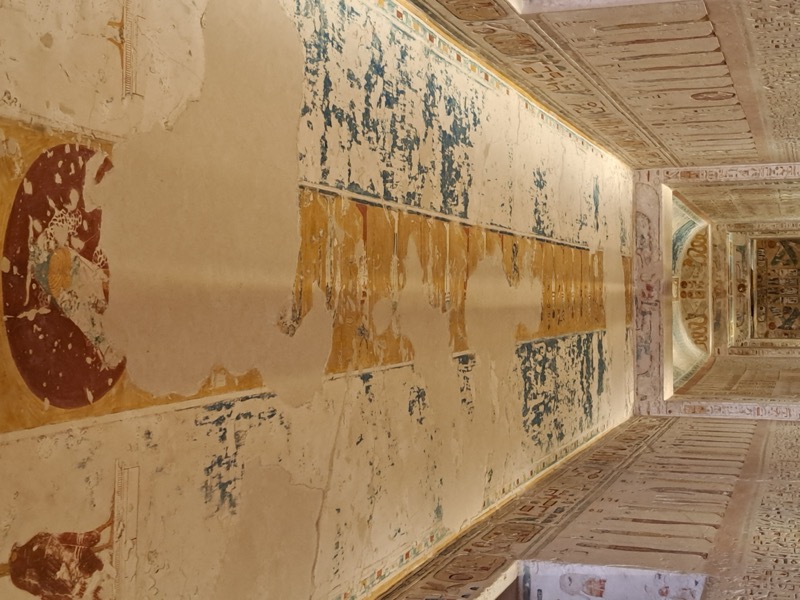
The most visually stunning tomb in the standard ticket rotation. Painted from the entrance corridor to the burial chamber with astronomical ceilings (the double image of the goddess Nut swallowing and birthing the sun is particularly affecting), scenes from the Book of Gates, the Book of Caverns, and the Book of the Earth. The sarcophagus hall ceiling alone — a deep sky-blue with stars and the full solar journey — justifies the visit. Queue early; this is the most popular standard-ticket tomb. Allow 30–40 minutes inside.

Finest Colour: KV11 — Ramesses III

One of the longest tombs at 125 metres, KV11 has unusually diverse decoration including scenes of daily life, blind harpists, and workshops — subjects rarely depicted in royal tombs. The colours in the outer corridors are particularly well-preserved. It is also one of the more wheelchair-accessible tombs, with a relatively gentle decline. Allow 35–45 minutes and take time in the side chambers that most visitors walk past.

Least Crowded: KV14 — Tausert/Setnakhte

A double-chamber tomb — originally built for Queen Tausert and later expanded by Setnakhte who needed more space after his own tomb encountered geological problems. The outer chambers retain Tausert's original blue-painted decoration while the inner chambers switch to Setnakhte's red-ground style. Significantly less visited than KV9 or KV11, giving more space and quieter contemplation. One of our researchers' personal favourites for precisely this reason.

Historical Priority: KV62 — Tutankhamun

The smallest royal tomb in the valley, which is why it was overlooked by ancient tomb-robbers and discovered intact in 1922 by Howard Carter. The mummy of Tutankhamun remains in the outer coffin (the gold death mask and other treasures are now at the Grand Egyptian Museum). The decoration is relatively simple by royal standards — only four rooms, with painting concentrated in the burial chamber. Worth visiting for historical significance; disappointing if you expect the visual richness of KV9. EGP 300 additional.

Practical Information

Photography, Access & Practical Rules

Photography rules at the Valley of the Kings are strictly enforced and differ by location — inside the tombs versus the exterior plateau. Understanding these before arrival avoids confrontation with site guards.

Rule 1

No Photos Inside Tombs

Photography of any kind — including mobile phones — is prohibited inside all tomb chambers. This is an SCA-wide rule enforced to protect pigments from flash deterioration. Guards will ask you to pocket your phone at the entrance. This applies even in dimly lit areas where flash would be unlikely.

Rule 2

Exterior Photography Permitted

Photography on the valley floor, at tomb entrances (exterior only), and of the mountain landscape is entirely permitted without restriction. The early morning and late afternoon light on the limestone cliffs is excellent. Tripods are allowed on the exterior without special permit.

Rule 3

Video Equipment

Professional video cameras and drones require advance permission from the Supreme Council of Antiquities (SCA), applied for separately with a filing fee. Handheld action cameras used as a personal camera (not for professional filming) fall into a grey area — use discretion. Guards have latitude to prohibit filming at their judgment.

Rule 4

Touch Nothing

Oils from human hands cause cumulative pigment damage. Do not touch any painted surface or carved relief — even for "just a moment". This is not a theoretical concern; popular tombs show visible darkening around figures at arm height from decades of visitor contact. Guards remove visitors who touch painted surfaces, and repeat offenders may be banned from the site.

Full Day Plan

West Bank Full-Day Itinerary

The Valley of the Kings sits within a broader landscape of royal and noble tombs, mortuary temples, and archaeological sites that together make up the Theban Necropolis. Here is how to combine them in one rewarding day from Luxor.

06:00 — Cross the Nile

Take the public passenger ferry from Luxor's east bank corniche — EGP 5 per person, departs every 10–15 minutes. Faster and more characterful than the bridge 10 km south. Hire a taxi or cycle on the west bank for the day.

06:30 — Valley of the Kings

Arrive at opening and complete your three standard-ticket tombs before 09:00. Use the tram (EGP 10) from the visitor centre to the valley entrance — it runs continuously. Begin with KV9 (Ramesses VI) as the first morning crowds head to Tutankhamun's tomb.

09:30 — Hatshepsut Temple

The Mortuary Temple of Hatshepsut (Deir el-Bahari) is 5 minutes' drive from the Valley. Its three colonnaded terraces cut into the cliff face are one of the most architecturally elegant structures in Egypt. Entry EGP 180. Allow 60–75 minutes. The wall reliefs depicting Hatshepsut's divine birth and expedition to Punt are exceptional.

11:00 — Medinet Habu & Colossi of Memnon

The Mortuary Temple of Ramesses III at Medinet Habu (EGP 180) is the best-preserved large temple on the west bank and significantly less visited than Karnak. The Colossi of Memnon — two enormous seated statues of Amenhotep III flanking the ancient processional road — are visible roadside and free to photograph from the street.

14:00 — Valley of the Queens

If time and energy permit, the Valley of the Queens contains the tomb of Nefertari (EGP 1,800 — the most expensive single tomb in Egypt, but justifiably so — its colours are the best-preserved in the entire necropolis). The standard Valley of the Queens ticket (EGP 100) covers several other queens' tombs without Nefertari.

Continue Exploring

Nearby & Related Destinations

Karnak Temple columns illuminated at sunset
Luxor East Bank

Luxor Temples

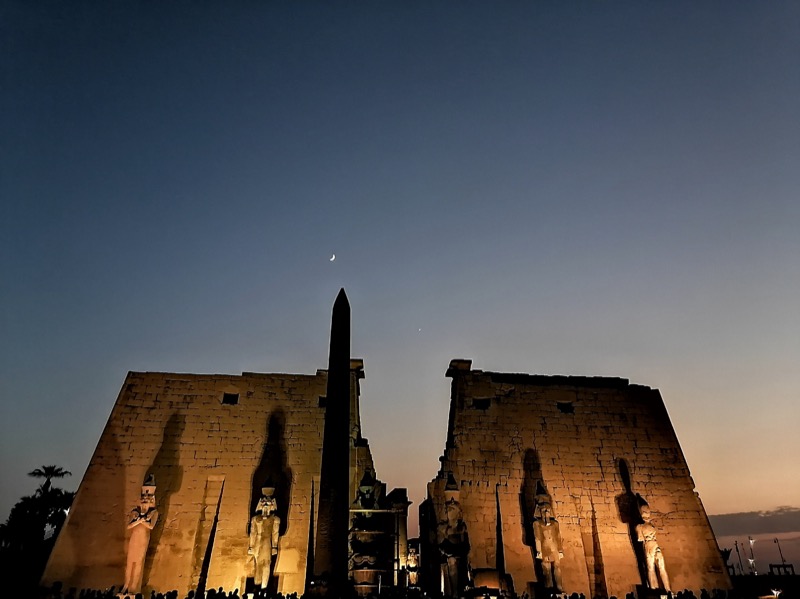
The east bank of Luxor is home to Karnak — the largest ancient religious site ever built — and Luxor Temple, open until 22:00 and illuminated dramatically after dark. Karnak's Great Hypostyle Hall (134 columns, the tallest 21 metres) is one of the most awe-inspiring spaces on earth.

Luxor Temples guide ›
Abu Simbel temple facade with four colossal Ramesses statues
Aswan

Aswan Highlights

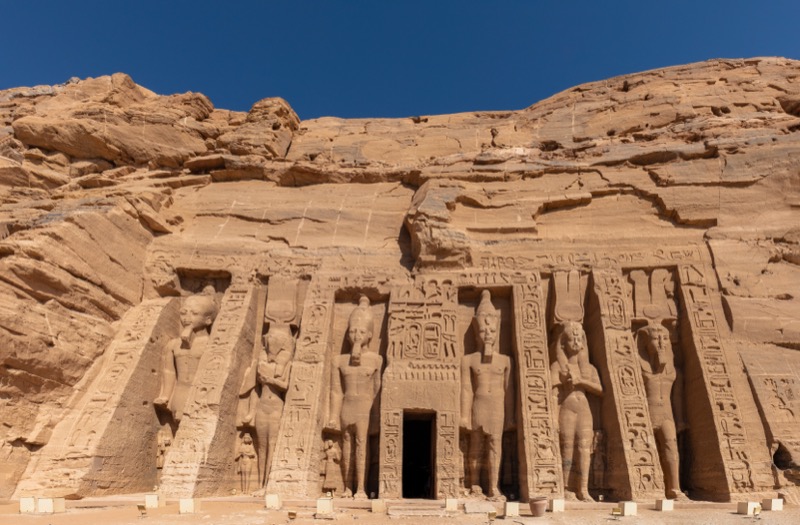
After Luxor, Aswan is the natural next destination on the Upper Egypt circuit — Philae Temple, the unfinished obelisk, the Nubian Museum, and the Abu Simbel temples (280 km further south) which represent the absolute peak of New Kingdom temple construction.

Aswan & Abu Simbel guide ›
A traditional dahabiya felucca sailing on the Nile
Nile Journey

Nile Cruises

Many visitors combine Luxor and Aswan by river — either on a large cruise ship or a traditional dahabiya (private sailing vessel). The four-day cruise covers Karnak, Luxor Temple, Edfu, Kom Ombo, and Aswan with all site visits included. Our guide assesses the real quality differences between vessel types.

Nile Cruises guide ›

Planning Your West Bank Day?

Our researchers are based in Luxor year-round. For current tomb availability, site conditions, and an optimal West Bank sequence for your travel dates, send us a message.

Reach the Desk