Egypt Site Reviews

Over 120 monuments, museums, and cultural sites reviewed by our researchers after personal visits — organised by region and category so you can plan with confidence.

The Giza Pyramids reflected at dusk, Cairo
Greater Cairo

Cairo Museums

Cairo's museums are among the richest repositories of ancient artefacts on earth. Our reviews cover collection depth, visitor flow, ticketing, and what to prioritise on limited time.

Grand Egyptian Museum atrium with Tutankhamun statues
Giza Plateau — Museum

Grand Egyptian Museum (GEM)

The Grand Egyptian Museum opened to the public in stages from 2022 and reached full operation in 2023 as the world's largest archaeological museum. Positioned directly west of the Giza Plateau along the Desert Road, it houses over 100,000 registered artefacts, with around 50,000 currently on permanent display across an exhibition floor exceeding 80,000 square metres.

The centrepiece is the complete Tutankhamun collection — all 5,398 objects from his tomb, displayed together for the first time since discovery in 1922. The main atrium houses two colossal statues of Ramesses II, each standing more than 11 metres tall. The Royal Mummies Hall in the upper galleries is particularly affecting, with 43 royal mummies displayed in climate-controlled cases under dramatically reduced lighting. Entry EGP 450 (standard), EGP 700 (with Royal Mummies Hall), EGP 200 students. Open daily 09:00–21:00. Last admission 20:00. Plan for a minimum of four hours.

Full guide to the Giza area ›
Egyptian Museum of Cairo Tahrir Square facade
Downtown Cairo — Museum

Egyptian Museum of Cairo

The original Egyptian Museum on Tahrir Square opened in 1902 and remains an irreplaceable institution even as the Grand Egyptian Museum assumes the role of Egypt's primary collection showcase. Its 107 exhibition halls house approximately 120,000 objects — the world's largest collection of Pharaonic artefacts — spanning five millennia from the Prehistoric period through the Greco-Roman era.

Following the progressive transfer of flagship pieces to the GEM, the Tahrir museum is undergoing redevelopment into a specialised museum of Egyptian civilisation covering the broader sweep of history including Islamic and Coptic periods. It remains open during this transition. Entry EGP 200 adults, EGP 60 students. Open daily 09:00–17:00. Key pieces still here include the Narmer Palette and substantial Middle Kingdom collections. Our researchers found the late afternoon particularly pleasant for visiting as crowds thin significantly after 14:00.

Plan your Cairo museum day ›
Museum of Islamic Art interior courtyard Cairo
Islamic Cairo — Museum

Museum of Islamic Art

One of the most undervisited institutions in Cairo relative to its quality, the Museum of Islamic Art on Bab el-Khalq Square houses over 100,000 artefacts spanning twelve centuries of Islamic civilisation — ceramics, textiles, woodwork, illuminated manuscripts, and geometric metalwork of extraordinary refinement. The collection draws from Egypt, Syria, Iraq, and the broader Islamic world.

The museum underwent a decade-long restoration following significant damage in a 2014 car bombing and reopened in stages from 2017. The reinstalled galleries are well lit and superbly labelled in both Arabic and English. Entry EGP 80 adults, EGP 40 students. Open Tuesday–Sunday 09:00–17:00, closed Monday. Allow two to three hours. Combine with the adjacent Bab Zuweila gate for a morning in Islamic Cairo.

Islamic Cairo day itinerary ›
Luxor & Aswan

Temples & Tombs

Upper Egypt holds the highest concentration of standing ancient monuments anywhere in the world. Our researchers are based permanently in Luxor, giving us access to site conditions, new openings, and restoration updates in near real time.

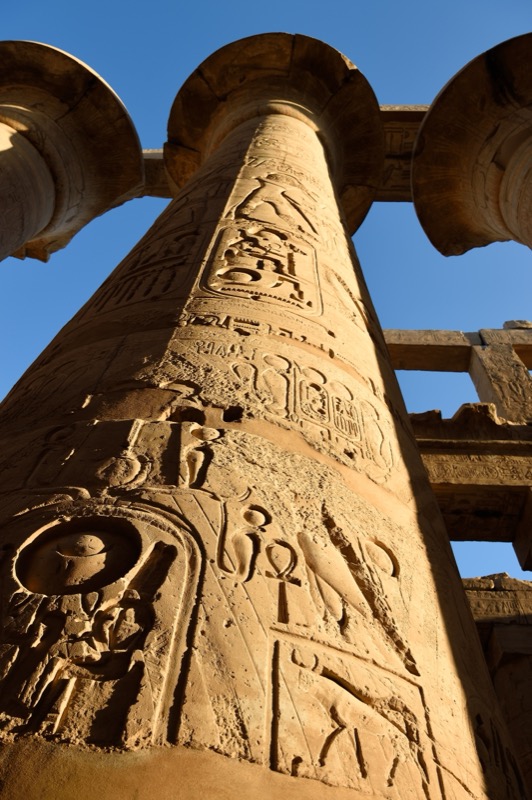
Karnak temple hypostyle hall columns at sunset
Luxor East Bank — Temple

Karnak Temple Complex

Karnak is the largest ancient religious site ever built, covering approximately 100 hectares across the Ipet-Isut precinct dedicated to Amun-Ra plus secondary precincts for Mut and Montu. Construction spanned roughly 2,000 years, from the Middle Kingdom through the Ptolemaic period, with every pharaoh adding or modifying structures. The scale is genuinely overwhelming and cannot be absorbed in a single morning.

The Great Hypostyle Hall — 134 sandstone columns arranged in 16 rows, the tallest reaching 21 metres and once supporting a roof spanning 5,500 square metres — is one of the most awe-inspiring human-made spaces in existence. The Sacred Lake, the Avenue of Ram-Headed Sphinxes, and the Cachette Court where over 17,000 bronze and stone statues were discovered in 1903 all reward extended exploration. Entry EGP 360 adults, EGP 90 students. Open daily 06:00–17:30. Our recommendation: arrive at opening and begin with the inner sanctuary, which the tour groups reach last. Allow a minimum of three hours.

Full Luxor Temples guide ›
Valley of the Kings tomb entrance limestone hills
Luxor West Bank — Necropolis

Valley of the Kings

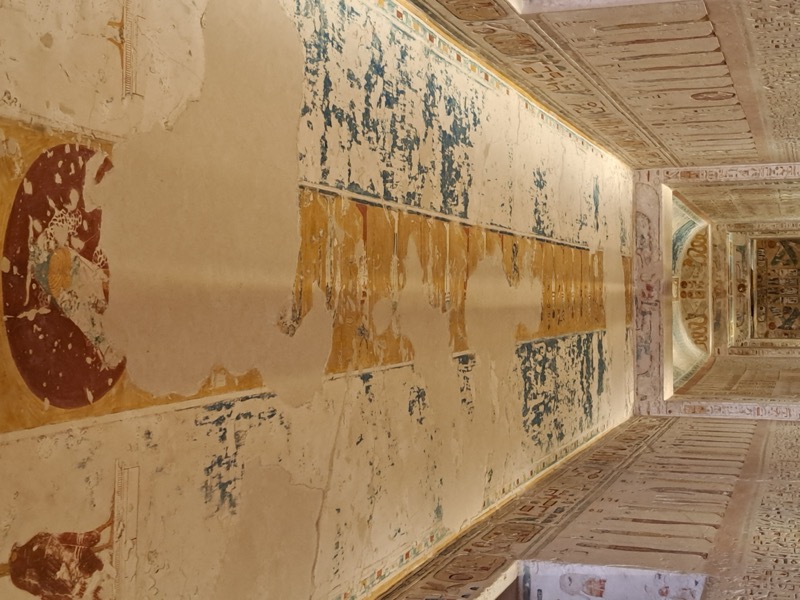
Sixty-three royal tombs were cut into the limestone hills of the Theban Mountain on Luxor's west bank between approximately 1550 and 1070 BCE, housing the mummified remains of rulers from the 18th through the 20th dynasties. The standard ticket (EGP 240) covers entry to the main valley and access to any three numbered tombs — visitors select on arrival from whichever are open that day.

Tutankhamun's tomb (EGP 300 additional) is small by royal standards but uniquely significant: the golden death mask, the layered shrines, and the gold-leaf-covered coffin were all found here in 1922 by Howard Carter. Ramesses VI (tomb KV9) offers the most spectacular ceiling paintings depicting astronomical scenes from the Book of Caverns and the Book of the Earth. Seti I (KV17) requires a separate premium ticket (EGP 1,400) but is universally regarded as the most finely decorated tomb in Egypt. Photography is prohibited inside all chambers; enforce this strictly as it protects the pigments.

Complete Valley guide ›
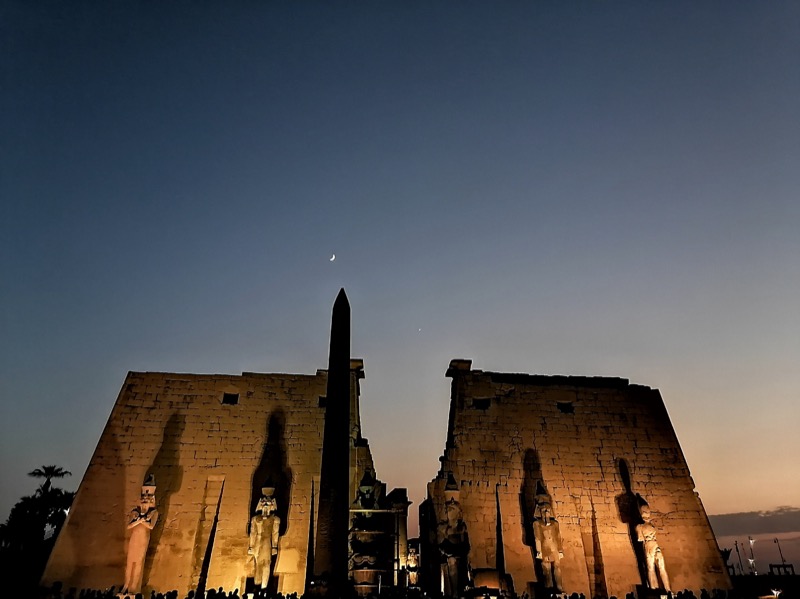
Luxor Temple pylons illuminated at night
Luxor East Bank — Temple

Luxor Temple

While Karnak dominates in scale, Luxor Temple is arguably the more emotionally resonant visit. Primarily built under Amenhotep III and Ramesses II around 1400–1250 BCE, it stands in the heart of the modern city — an extraordinary juxtaposition of fourth-millennium stone and contemporary Luxor street life. The Abu el-Haggag mosque perches atop the east colonnade, illustrating 4,000 continuous years of sacred use of the same site.

The Avenue of Sphinxes — 2.7 kilometres of ram-headed and human-headed sphinxes connecting Luxor and Karnak temples — was fully excavated and restored in 2021 and can now be walked in full. Luxor Temple remains open until 22:00, illuminated dramatically after dark. Entry EGP 260 adults, EGP 65 students. Visiting at dusk allows you to see both the daylight architectural detail and the evening lighting equally well — the best single-ticket value in Upper Egypt.

Plan your Luxor visit ›
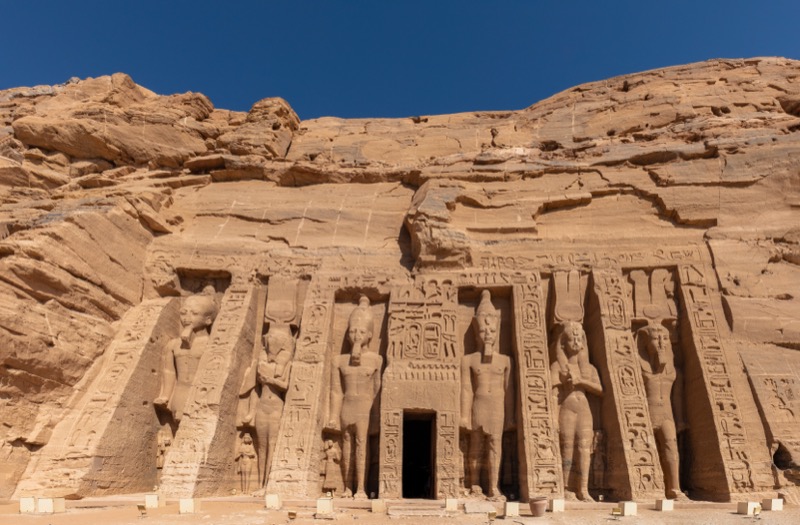
Abu Simbel colossal Ramesses statues facade
Aswan — Temple

Abu Simbel Temples

Two rock-cut temples carved under Ramesses II around 1264 BCE were relocated stone by stone between 1964 and 1968 — one of the most ambitious engineering operations in history — to save them from the rising waters of Lake Nasser created by the Aswan High Dam. The relocation cost $42 million (equivalent to nearly $400 million today) and involved cutting the temples into over 1,000 blocks, each weighing up to 30 tonnes, and reconstructing them 65 metres higher and 200 metres back from the original site.

The Great Temple's facade features four colossal seated statues of Ramesses II, each 20 metres high, flanking the entrance. The interior sanctuary is precisely oriented so that sunlight illuminates the inner sanctum and the statues of Ramesses and Amun on 22 February and 22 October each year — the pharaoh's birthday and coronation date. Entry EGP 450 adults, EGP 225 students. Most visitors take an early-morning flight or overnight drive from Aswan (280 km). Our guide includes the optimal arrival window to avoid the tour-group peak.

Aswan & Abu Simbel guide ›
Greater Cairo & Memphis

Monuments & Necropolises

The area south of Cairo — ancient Memphis and the necropolis fields of Saqqara, Dahshur, and Giza — contains the densest concentration of pyramid-age monuments anywhere. Plan at least two full days.

Great Pyramid of Giza with Sphinx in foreground
Giza — Pyramid Complex

Giza Plateau

The Giza Plateau, 12 kilometres southwest of central Cairo, is the only intact Wonder of the Ancient World. The complex comprises three major pyramids — the Great Pyramid of Khufu (originally 146.5 metres, the world's tallest building for 3,800 years), the Pyramid of Khafre, and the smaller Pyramid of Menkaure — flanked by the Great Sphinx and a field of mastaba tombs belonging to nobility and royal officials.

A general site ticket (EGP 160) covers the plateau and Sphinx enclosure. Interior access to the Great Pyramid (EGP 400 additional) requires a separate ticket limited to 300 visitors per day, sold in advance via the official SCA website. The interior climb is claustrophobic and extremely warm — genuinely only worthwhile for those with a strong interest in pyramid construction. The Solar Boat Museum (adjacent to the Great Pyramid, EGP 100) houses a reconstructed 4,600-year-old cedar boat found in a sealed pit in 1954.

Full Giza Plateau guide ›
Step Pyramid of Djoser at Saqqara with desert landscape
Memphis Region — Necropolis

Saqqara & the Memphis Necropolis

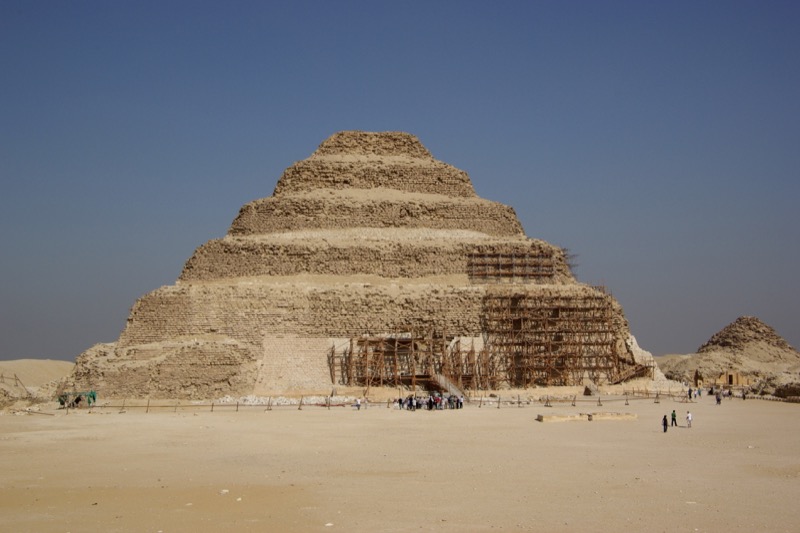
Saqqara served as the primary royal necropolis for the ancient capital Memphis across three millennia. The site covers 7 kilometres north to south and contains not only the Step Pyramid of Djoser — built around 2650 BCE by architect Imhotep as the world's first large stone structure — but also the Pyramid of Unas (which bears the oldest Pyramid Texts ever found), the Serapeum (a subterranean gallery housing the enormous granite sarcophagi of the sacred Apis bulls), and the mastaba fields of Old Kingdom nobles with their richly painted offering chambers.

Recent excavations at Saqqara continue to produce remarkable finds — a cache of 59 sealed wooden coffins containing New Kingdom mummies was discovered as recently as 2020, along with gilded statues, shabtis, and papyri. The Step Pyramid itself is currently mid-restoration and the exterior scaffolding is visible, but the complex around it and the Djoser courts remain fully accessible. Entry Saqqara EGP 180 adults. Memphis Open-Air Museum (just 3 km north) EGP 100 adults. Easily combined as a half-day excursion from Cairo.

Memphis & Saqqara full guide ›
Western Desert & Oases

Desert Excursions

Egypt's Western Desert is vast and largely empty — but the oasis towns of Siwa, Bahariya, and the surreal White Desert landscape reward travellers willing to venture beyond the Nile valley corridor.

White Desert chalk formations at dawn near Farafra
Western Desert — Landscape

White Desert National Park

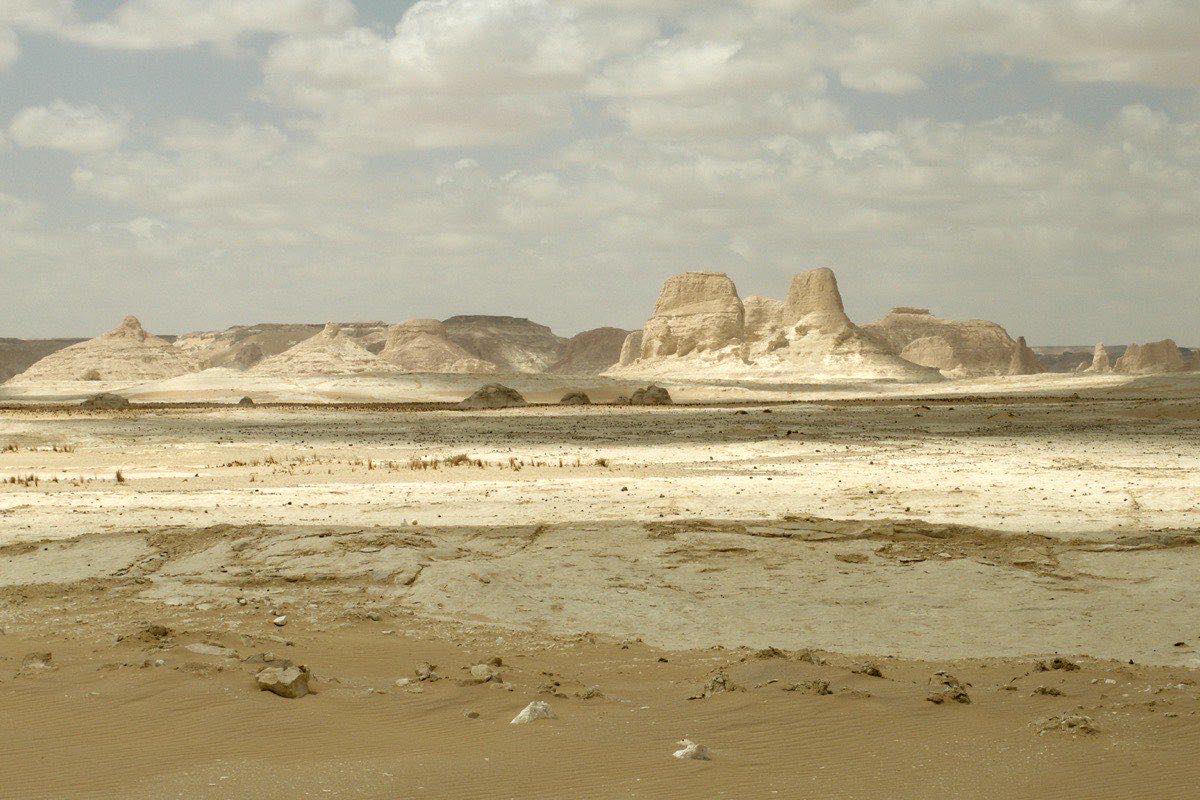
The White Desert (Sahara el-Beyda) National Park, 45 kilometres north of Farafra Oasis, contains one of the most visually otherworldly landscapes in Africa: hundreds of chalk rock formations sculpted by wind erosion into mushroom shapes, isolated towers, and organic white masses rising from a flat sandy plain. The formations glow orange-pink at sunset and brilliant white under a full moon — the latter a genuinely memorable experience that attracts overnight campers from across Egypt and internationally.

The park is typically visited as part of a two-to-three-day Western Desert circuit from Cairo combining Bahariya Oasis — a full day, including the Valley of the Golden Mummies archaeological site and the Bahariya Antiquities Museum — with an overnight camp in the White Desert. The Black Desert and Crystal Mountain (a quartz ridge glittering in sunlight) are easily added along the same route. Entry National Park EGP 25 adults. Guided overnight camp packages from EGP 1,200–1,800 per person (transport, camping gear, meals). No public transport; a 4WD is required or book through a licensed Bahariya outfitter.

Combine with a Nile cruise ›
Siwa Oasis Oracle Temple ruins with palm trees
Western Desert — Oasis

Siwa Oasis

Siwa Oasis sits 560 kilometres west of Cairo near the Libyan border and operates as a world apart — a Berber-speaking community built around thousands of date palms and freshwater springs, with a distinct culture, architecture, and pace of life that genuinely cannot be compared to the Nile valley. The ancient mud-brick ruins of Aghurmi village and the adjacent Temple of the Oracle — where Alexander the Great sought divine confirmation of his destiny in 331 BCE — crown a rocky outcrop above the palm groves.

The Temple of Amun at Um Ubeida and the ancient Shali fortress (now weathered to melted-looking mud ruins) round out the historical sites. The journey itself — either by bus overnight from Cairo or by private car — passes through the Great Sand Sea and the dramatic Qara Depression, itself a worthwhile destination. Accommodation is limited but a handful of excellent eco-lodges at the lake (Birket Siwa) have raised the standard considerably. Siwa requires a minimum two-night stay to make the trip worthwhile.

Northern coast & Alexandria ›
Alexandria & the Northern Coast

Coastal & Alexandria

Egypt's Mediterranean coast offers a counterpoint to the desert interior — Greek and Roman layers atop an ancient Egyptian base, a very different architectural character, and the sea itself.

Bibliotheca Alexandrina modern facade on the Alexandria waterfront
Alexandria — Cultural

Bibliotheca Alexandrina

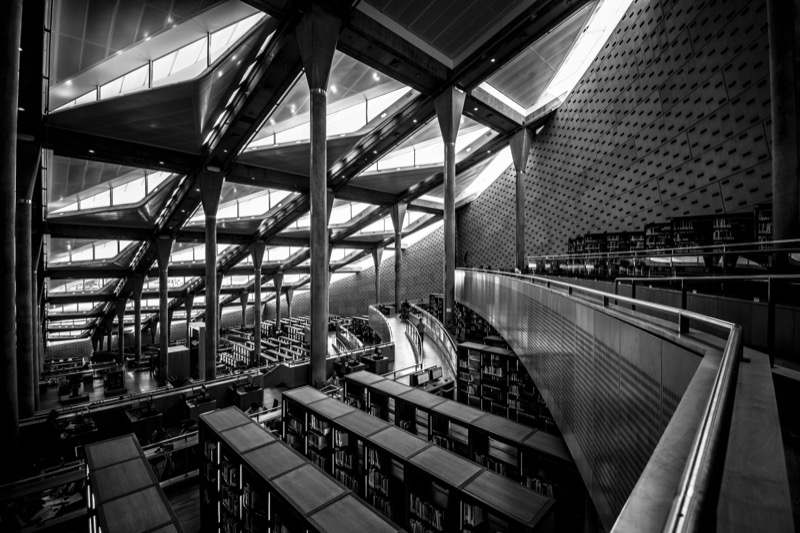
The Bibliotheca Alexandrina, opened in 2002, is a modern cultural institution built to honour the ancient Library of Alexandria — one of the ancient world's greatest centres of learning, which functioned from around the 3rd century BCE until its gradual decline in the Roman period. The building itself, designed by a Norwegian architectural consortium and Egyptian collaborators, is a striking disc of Aswan granite tilted toward the sea with a glass roof sheltering 11 reading levels.

The complex houses the main library reading room (one of the largest in the world at 70,000 square metres), four museums including an excellent Antiquities Museum with Ptolemaic and Roman period artefacts, a manuscript archive, a science museum, and a digital arts centre. The Planetarium operates shows in Arabic and English. Entry main library free; museum complex EGP 60–120 depending on sections. Allow three hours minimum. The waterfront Corniche walk (30 minutes from the Bibliotheca to the Eastern Harbour) is one of Egypt's most pleasant urban promenades.

Full Alexandria & Coast guide ›
Catacombs of Kom el-Shuqqafa entrance Alexandria
Alexandria — Antiquities

Greco-Roman Alexandria

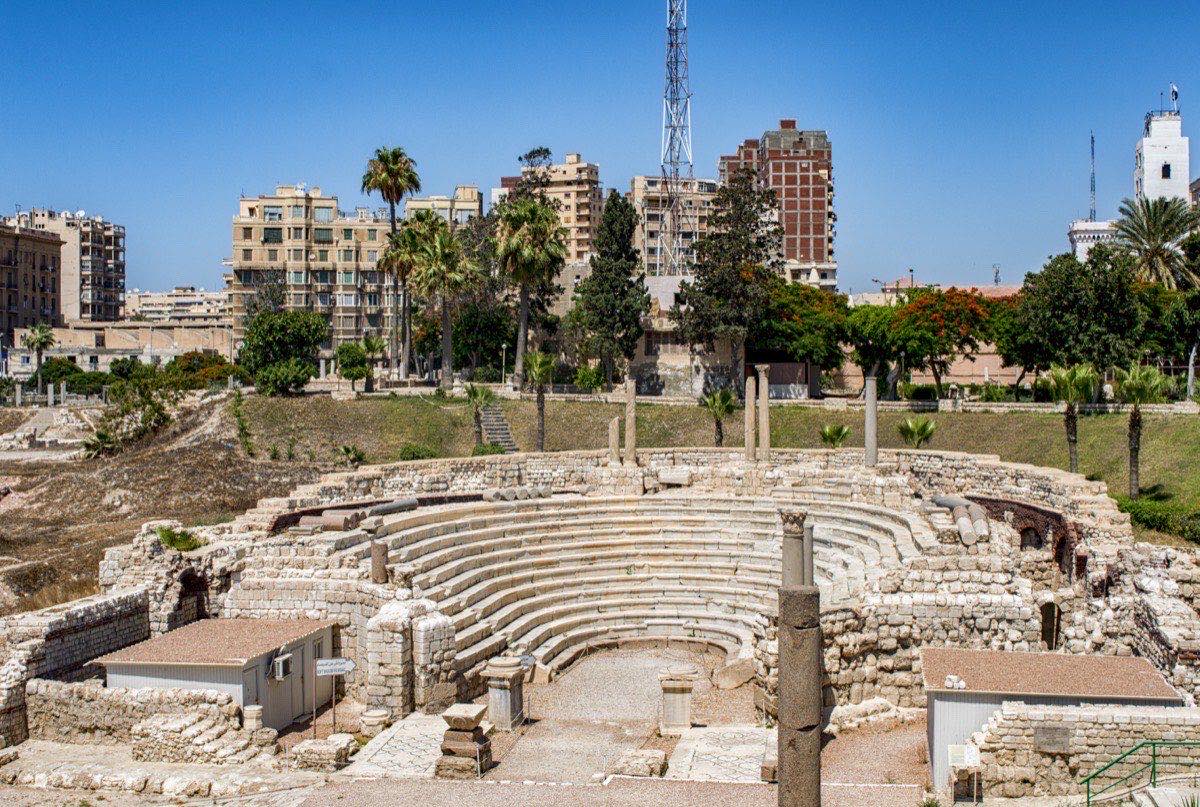
Alexandria's Greco-Roman heritage is scattered across the city in fragments — but the fragments are remarkable. Kom el-Dikka (the only surviving Roman-era theatre in Egypt, with intact marble seating for 800 spectators), the Catacombs of Kom el-Shuqqafa (a three-level underground necropolis from the 2nd century CE mixing Egyptian and Roman funerary iconography in a unique hybrid style), and Pompey's Pillar (a 30-metre granite column from the late 3rd century CE, misnamed by medieval European crusaders) form the core of an achievable half-day antiquities circuit.

The Greco-Roman Museum on Ahmed Orabi Street, which held one of Egypt's finest Hellenistic collections, is currently closed for long-term restoration but is expected to reopen in 2025. The National Museum of Alexandria (housed in an early-20th-century Italian-built palace in Shar'a el-Freedon) partially fills this gap with a three-floor collection of Pharaonic, Greco-Roman, and Islamic artefacts. Entry Catacombs EGP 120, Kom el-Dikka EGP 80. Alexandria is 220 kilometres from Cairo — most visitors manage it as a day trip, but an overnight allows a more relaxed experience.

Plan your Alexandria visit ›

Need a Tailored Itinerary?

Our team can recommend the best combination of sites for your available time, interests, and mobility requirements — with realistic timing and current entry price information.

Send a Message